A hot flash is not just “feeling a bit warm.”
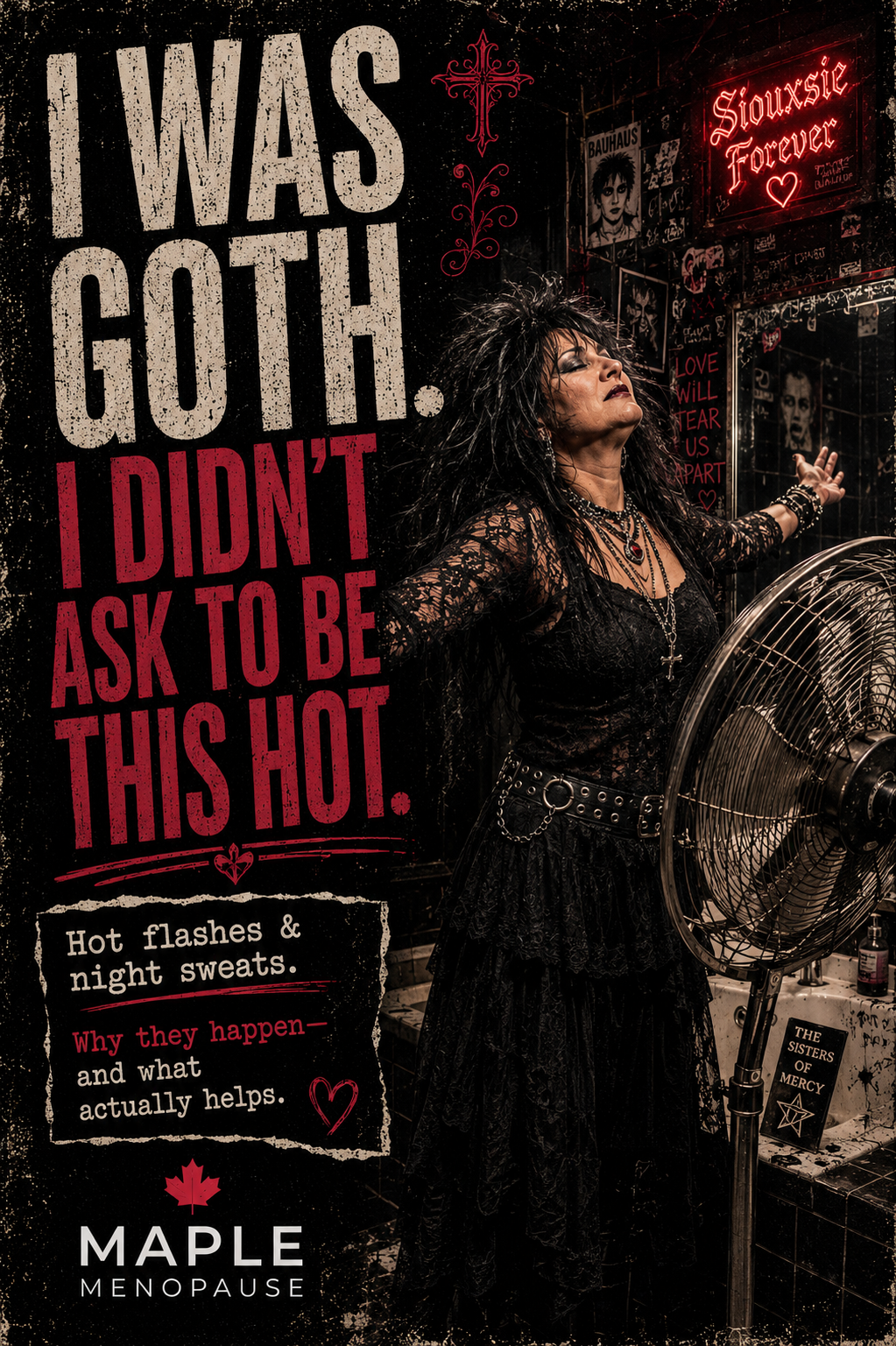
Hot flashes and night sweats are vasomotor symptoms: menopause-related hormonal changes affect the brain’s temperature regulation, making the body’s control system unusually sensitive to small temperature shifts. It may respond by widening blood vessels near the skin and switching on sweating even when the room is not especially hot. Night sweats are essentially hot flashes that happen during sleep. Our general symptom guide explains more about what hot flashes and night sweats can feel like.
For some women it is a quick nuisance. For others it means sweat running down the back during a meeting, changing pyjamas at 2 a.m., and functioning the next day on fractured sleep. Treatment should match the disruption — not some imaginary menopause endurance contest.
IN THIS ARTICLE
First: decide whether you actually need treatment
For a week or two, count roughly how often they happen and what they cost you: sleep, concentration, work, exercise, intimacy, confidence, sanity. Mild and occasional may need little more than practical coping. Repeated night waking or symptoms that alter your life deserve a real treatment discussion.
What you can do today
Use layers you can remove without performing a full costume change. Keep the bedroom cooler if night sweats are a major issue. A bedside fan, breathable sleepwear, moisture-managing bedding and a dry shirt within reach can make a bad episode less disruptive.
Comfort products may make an episode easier to manage, but they do not treat or prevent vasomotor symptoms. A few relevant options already included in our practical sleep guide are:
- Elegear Arc-Chill cooling blanket
- Bedsure bamboo-derived cooling sheets
- Joyaria bamboo-viscose cooling pyjamas
- Levoit 36-inch tower fan
- under-sheet bed fan
- lightweight cooling comforter
Affiliate disclosure: Maple Menopause may earn a commission from qualifying purchases at no additional cost to you.
Then test your personal triggers instead of obeying a universal prohibition list. Alcohol triggers some women. Hot rooms, spicy food and hot drinks bother others. If you suspect something, change one variable for a couple of weeks and see whether the pattern changes.
What does NOT deserve top billing
Exercise is excellent for cardiovascular, bone, metabolic and mental health. It is not a reliably effective stand-alone hot-flash treatment. Cooling tricks can improve comfort but do not switch off the underlying vasomotor mechanism.
The Menopause Society’s evidence review did not recommend supplements/herbal remedies as a class for treating vasomotor symptoms because evidence is insufficient or inconsistent. That matters in a market full of black cohosh, “hormone balancing” blends and expensive powders.
If you want to try a supplement anyway, treat it like a drug decision: check the evidence for the actual ingredient and dose, look for interactions, and give it a defined trial rather than collecting six products indefinitely.
A simple treatment ladder
Mild and manageable → practical cooling, identify personal triggers, protect sleep.
Moderate/severe or disrupting life → discuss systemic MHT if appropriate.
Prefer or need non-hormonal treatment → discuss evidence-based prescription options.
Still symptomatic → reassess the diagnosis, treatment response and adherence, triggers, other medications and other possible causes of sweating.
Why the heat can feel so sudden
Body temperature is regulated in the hypothalamus. During the menopause transition, changing estrogen signalling affects thermoregulatory networks that include kisspeptin, neurokinin B and dynorphin (KNDy) neurons. The comfortable temperature range can narrow, so a small internal or environmental change may trigger skin blood-vessel widening, a faster heartbeat and sweating. That is why a hot flash can feel less like gradually becoming warm and more like somebody abruptly changed the settings.
If night sweats are disrupting sleep or the pattern is unclear, track them for about two weeks: note timing, severity, whether clothing or bedding had to be changed, menstrual status, room temperature, alcohol or caffeine, new medications and next-day effects. Also record symptoms such as palpitations or snoring. A pattern gives a clinician more useful information than “I sleep badly.”
When night sweats deserve a second look
Menopause is common; it is not the only reason people sweat at night. New drenching sweats with fever, unexplained weight loss, swollen lymph nodes, significant illness or a pattern that does not fit your menopause story deserves assessment. So does unexplained bleeding before starting or changing systemic hormone therapy.
For a fuller Canadian treatment overview—including systemic versus local estrogen and why uterine protection matters—read Hormones and menopausal hormone therapy in Canada. If night sweats are breaking up sleep, the next useful step is the 3 a.m. sleep guide. If the confusing part is why flashes can appear while periods are still changing, the cycle-and-thermostat guide explains that transition.
What to say at your appointment
Instead of “I get hot flashes,” try: “I have six to eight a day and wake three times most nights; it is affecting my work.” Then ask: Am I a reasonable candidate for MHT? Would transdermal or oral estrogen make more sense for me? If I prefer non-hormonal treatment, which options fit my medications and health history? When should we reassess whether it is working? The Maple Menopause appointment checklist can help you organize the pattern, impact and questions before you go.
Practical cooling support
If heat is making nights miserable, you do not necessarily need to buy a bedroom full of “menopause products.” Start with the problem you are actually trying to solve—airflow, sweaty bedding, heavy sleepwear or trapped heat. We collected practical cooling and sleep products women use during menopause in one place, with notes on what each may help with and what it cannot do.
See the practical cooling and sleep guide →
Cooling products can improve comfort. They do not treat the underlying vasomotor symptoms.
You do not win menopause by enduring the most hot flashes.
If they are changing how you sleep, work or live, that is enough reason to discuss treatment.
Alcohol is not a universal trigger, but it is a useful variable to test. Why alcohol can hit differently in perimenopause and menopause explains the sleep and symptom overlap.