You may have spent 30 years knowing exactly what two drinks do to you. It is profoundly irritating when your body changes the terms of the agreement without sending an email.
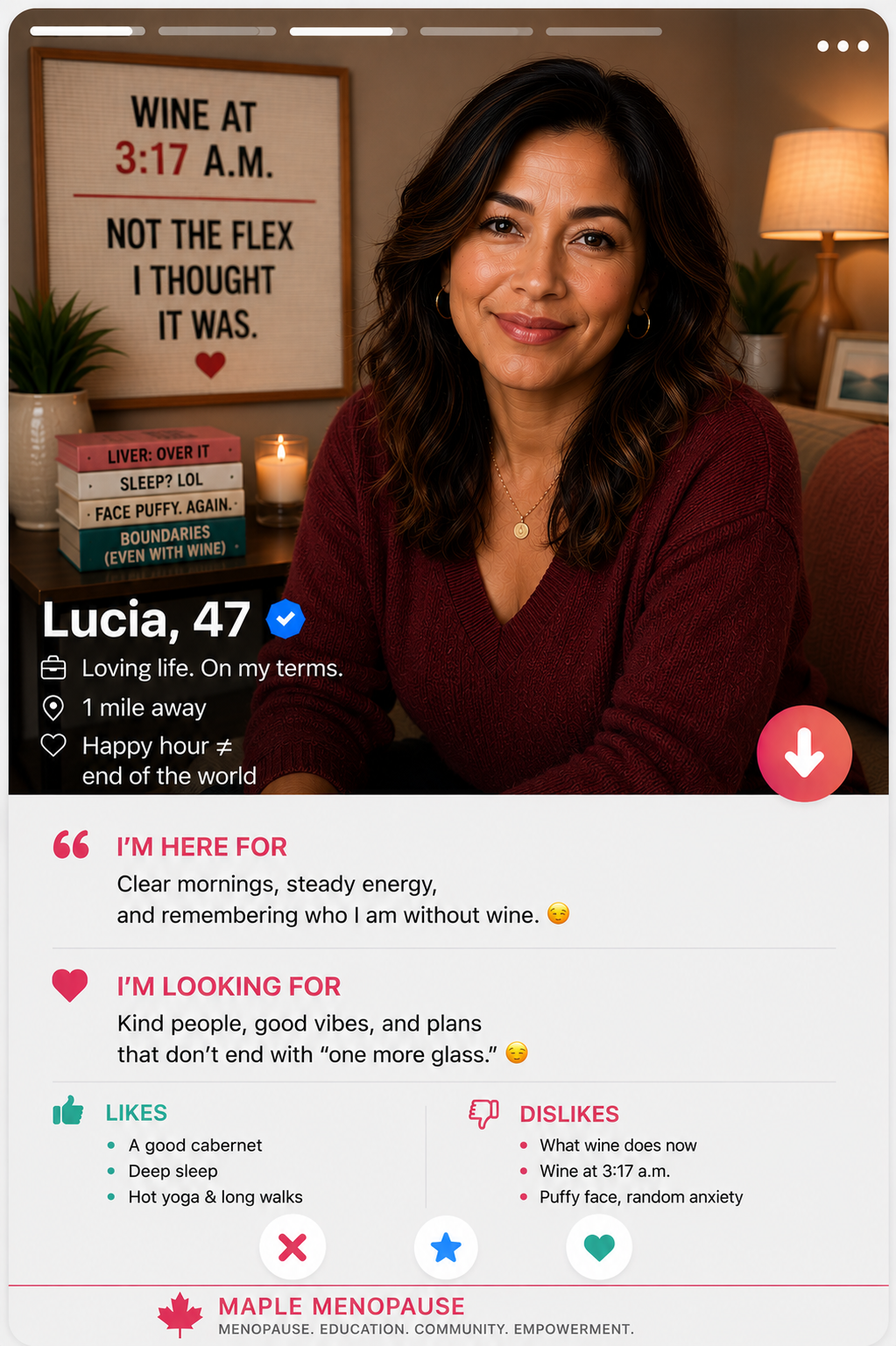
One drink used to be pleasant. Two made you chatty. Three meant water before bed and perhaps a slower Saturday morning. Then, somewhere in your 40s or 50s, two glasses of wine start behaving like a serious administrative error.
You wake hot and thirsty at 3:12 a.m., your heart seems unusually interested in announcing itself, and by breakfast you are anxious about something you said to Brenda in 2006. Or nothing so dramatic happens: alcohol simply wrecks your sleep, amplifies a headache or charges a next-day price you no longer want to pay.
Many women say alcohol feels different in perimenopause and menopause. The experience is real. The explanation is less tidy than “low estrogen makes you a lightweight.” Aging, body composition, sleep, symptoms, medications, health conditions and drinking patterns can overlap, while research has not identified one reliable menopause-specific switch in alcohol metabolism.
IN THIS ARTICLE
- Does menopause actually lower alcohol tolerance?
- The drink that “helps” you sleep
- Why the next morning can feel anxious
- Hot flashes: common trigger, mixed evidence
- Palpitations are not automatically benign
- Migraine can change the calculation
- Your medication cabinet may have changed
- Does hormone therapy change alcohol tolerance?
- Breast cancer risk, without the crime-scene tape
- What Canada’s current alcohol guidance says
- From wine coolers to “Mommy Needs Wine”
- You can reconsider drinking without adopting an identity
- Try a two-week experiment
- If you still like drinking
- Alcohol-free is increasingly ordinary
- The new calculation
Does menopause actually lower alcohol tolerance?
Alcohol is absorbed through the stomach and small intestine and metabolized mainly by the liver. Its concentration and effects depend on the amount and speed of drinking, food, body size and composition, total body water, biological sex, genetics, liver health, medications and other variables.
Total body water generally decreases with age, while the proportion of body fat often increases. Because alcohol distributes in body water, the same dose can produce a higher blood alcohol concentration when there is less water available to dilute it. Older adults can also be more sensitive to alcohol’s effects on balance, coordination, sleep and thinking.
On average, women reach higher blood alcohol concentrations than men of the same weight after the same amount, in part because of differences in body water and alcohol metabolism. Those averages do not predict exactly how one individual will feel on one evening.
Where does estrogen fit? The menopause transition involves major hormonal fluctuations, but there is not good evidence for a simple formula in which falling estrogen directly turns two glasses into four. Subjective sensitivity is not the same thing as a measured blood alcohol concentration, and studies have not given us a menopause-specific alcohol-tolerance calculator.
If alcohol suddenly feels different at 48, menopause may be part of the context. Ordinary aging, changing body composition, poorer baseline sleep, migraine, anxiety, medications or a different pattern of drinking may be doing some of the work. We do not know exactly why this happens for every woman.
The drink that “helps” you sleep
Alcohol has sedating effects, so it can shorten the time it takes to fall asleep. That immediate result is persuasive when menopause sleep has become unreliable.
Falling asleep, however, is only one part of sleep. As alcohol is metabolized, it can disrupt normal sleep architecture, increase wakefulness in the second half of the night and reduce sleep efficiency. It may worsen snoring and obstructive sleep apnea, and the extra fluid can send you to the bathroom.
The drink that helped you fall asleep at 10:30 may be participating in the ceiling inspection at 3:14.
That matters when sleep is already vulnerable because of hot flashes and night sweats, insomnia, anxiety or sleep apnea. You remember the pleasant first hour; you may not connect it with the fractured second half of the night. A drinking night and a bad-sleep night can be the same event viewed from opposite ends.
Why the next morning can feel anxious
“Hangxiety” is not a formal diagnosis, but the experience behind the internet-friendly name is recognizable. Alcohol acutely affects inhibitory and excitatory signalling in the brain, including GABA and glutamate systems. As it wears off, rebound arousal can contribute to restlessness, irritability and anxiety; disrupted sleep and the physical discomfort of a hangover can intensify the feeling.
That does not mean every anxious morning can be reduced to one neurotransmitter diagram. Expectations, memory gaps, dehydration, autonomic effects, underlying anxiety and what actually happened the night before may all matter.
Perimenopause is a period of increased anxiety or mood vulnerability for some women. Combine that with poor sleep and alcohol-related rebound, and a formerly ordinary hangover may acquire an emotional component. If anxiety or panic is new, persistent or interfering with daily life, it deserves assessment rather than a permanent label of “hangxiety.”
An anxious hangover is also different from alcohol withdrawal. Withdrawal can include tremor, sweating, agitation, nausea, rapid heart rate, hallucinations or seizures and can be medically dangerous in someone who is physically dependent. More on that distinction below.
Hot flashes: common trigger, mixed evidence
Alcohol is often reported as a hot-flash or night-sweat trigger, and some observational research links higher consumption with more bothersome vasomotor symptoms. The overall literature is not consistent enough to say alcohol universally causes hot flashes.
Population evidence and individual experience answer different questions. If wine reliably brings on flushing or a miserable night, that pattern is useful even if another woman notices no effect. You do not need to invent a trigger because a list says you should, and you do not need a randomized trial to notice your own repeatable result.
Palpitations are not automatically benign
Alcohol can raise heart rate and blood pressure, and heavier intake contributes to hypertension and cardiovascular disease. It can also trigger atrial fibrillation in susceptible people. Palpitations are reported during the menopause transition too, which makes “probably hormones” an appealing but inadequate conclusion.
A brief familiar flutter and a sustained irregular rhythm are not the same thing. Arrange medical assessment for new, recurrent or concerning palpitations. Seek urgent care if they come with chest pain, fainting, marked shortness of breath, weakness or other acute symptoms.
Migraine can change the calculation
Migraine patterns can change as reproductive hormones fluctuate, particularly during perimenopause. Alcohol is a trigger for some people with migraine, but triggers vary and the evidence does not justify telling every migraine sufferer to abstain.
The practical question is whether drinking predicts your headache often enough to matter. One of the peculiar features of midlife is discovering that certain pleasures have developed increasingly unreasonable cover charges. You can still decide whether a particular occasion is worth paying for.
Your medication cabinet may have changed
Alcohol can interact with prescription and non-prescription drugs. Depending on the medication, it may increase sedation, dizziness, impaired coordination, breathing suppression, bleeding, liver injury or other adverse effects.
Particular caution is warranted with sleeping pills, benzodiazepines, opioids, sedating antihistamines and other central-nervous-system depressants. Some antidepressants and medications affecting the liver or bleeding also require individual advice. This is not a complete interaction list.
“It’s only one drink” is not a reliable interaction checker. Your pharmacist is. Check the label and ask when starting or changing any medicine, including non-prescription products.
Does hormone therapy change alcohol tolerance?
There is no good basis for promising that menopausal hormone therapy will restore your previous alcohol tolerance—or predictably reduce it. If treatment improves night sweats and sleep, you may feel better overall. That is not the same as changing how your body metabolizes a cocktail.
Alcohol and menopausal hormone therapy are separate exposures with separate benefit-and-risk discussions. Drinking does not automatically rule out appropriately prescribed MHT, and their risks should not be treated as interchangeable. A clinician should consider alcohol use alongside personal and family history when discussing overall health and breast-cancer risk.
Breast cancer risk, without the crime-scene tape
Alcohol is an established carcinogen and a modifiable breast-cancer risk factor. At a population level, breast-cancer risk rises as alcohol consumption rises. Alcohol is also linked with cancers of the mouth, throat, esophagus, liver and colon or rectum.
That does not mean a woman who drinks will develop cancer, or that an occasional drink carries the same risk as regular heavy consumption. It means there is no completely risk-free level for cancer and that lower consumption means lower alcohol-related risk.
Good risk communication gives adults information without converting a wine glass into evidence of moral failure. Pleasure, food, tradition and social connection are real values. So are cancer prevention and sleep. People weigh them differently.
What Canada’s current alcohol guidance says
Canada’s 2023 Guidance on Alcohol and Health replaced the older style of “moderate” daily limits with a continuum of risk. The central message is that less is better for health:
- 0 drinks per week: no alcohol-related risk.
- 1–2 standard drinks per week: low risk.
- 3–6 per week: moderate risk, with increased risk of several cancers including breast and colon cancer.
- 7 or more per week: increasingly high risk, including a significantly higher risk of heart disease or stroke.
If you drink more than two standard drinks a week, the guidance recommends not exceeding two on any day. One Canadian standard drink is 341 mL of 5% beer or cider, 142 mL of 12% wine, or 43 mL of 40% spirits. A generous home pour may contain more than one standard drink.
These categories describe population risk, not diagnoses. Drinking above a guideline does not automatically mean someone has alcohol-use disorder. It does mean the health risk is higher than older cultural messages about a “healthy” daily glass suggested.
From wine coolers to “Mommy Needs Wine”
Gen-X women have lived through wine coolers, pub nights, shooters, cosmopolitans and martinis, then an era when wine became shorthand for exhausted female adulthood. Wine o’clock. Girls’ night. Mommy needs wine. The joke worked because women really were exhausted.
Alcohol was marketed not only as pleasure but as a reward for surviving work, children, marriage, caregiving and Wednesday. That is worth examining without shaming the women to whom it was sold.
If the thing you use to relax worsens sleep, increases next-day anxiety or aggravates symptoms you already dislike, it may no longer be performing the job you hired it for.
You can reconsider drinking without adopting an identity
Alcohol conversations are often flattened into two groups: people who drink “normally” and people with a disorder. Real life contains much more territory.
You can enjoy drinking and want fewer drinks. You can decide one is enjoyable and two are not. You can drink only with a good meal, take a month off, choose alcohol-free options or stop entirely without building a public identity around it.
You do not have to have an alcohol problem to decide alcohol is becoming a problem for you. You also do not have to quit to benefit from knowing what it does to your symptoms.
Try a two-week experiment
This is not a detox and it cannot diagnose anything. It is simply a way to test whether alcohol may be contributing to a pattern. Over two weeks, include both alcohol-free evenings and, if you choose to drink and can do so safely, drinking evenings.
- what and how much you consumed, using standard drinks where possible
- the time you drank and whether you ate
- bedtime and how easily you fell asleep
- overnight waking and bathroom trips
- hot flashes or night sweats
- palpitations, flushing, digestive symptoms or headache
- morning anxiety and mood
- next-day energy
Menopause symptoms fluctuate naturally, so one bad night proves little. Repeated patterns are more useful. You may discover no noticeable difference, that timing matters, or that one drink is fine while two or three are a catastrophe.
One important exception
If you drink heavily or regularly enough that physical dependence is possible, do not stop abruptly because an internet article suggested an experiment. Alcohol withdrawal can be medically dangerous. Speak with a clinician about reducing safely; if withdrawal symptoms are severe, worsening or include confusion, hallucinations or seizures, seek emergency care.
If you still like drinking
Then this article has not failed. Alcohol can accompany food, celebrations, travel, friendship, flirting and a really excellent patio. Health is one value among several people consider.
If you choose to drink, lower-risk practices include drinking less overall and more slowly, eating when you drink, alternating with non-alcoholic beverages, avoiding alcohol as a sleep aid, checking medication interactions and never driving after drinking. None makes alcohol risk-free.
You can also become pickier. If alcohol now charges a 12-hour hangover for 90 minutes of fun, reserve it for occasions when the fun is unusually good.
Alcohol-free is increasingly ordinary
Alcohol-free beers, wines, sparkling drinks and spirits have become more varied. Some are excellent. Some taste as though beer was described over the phone to a glass of water. Sparkling water with lime remains available.
The broader cultural change matters more than the products. Drinking less, drinking selectively or being “sober curious” no longer requires a dramatic explanation. “I don’t feel like it” is a complete reason.
The new calculation
Your body has aged. Hormones and symptoms may be changing. Sleep, medications and priorities may be different. Alcohol itself has not become healthier simply because it once seemed easier to tolerate.
Maybe you keep the Friday cocktail. Maybe one drink becomes the sweet spot. Maybe clear-headed mornings turn out to feel better than drinking ever did. None of those choices earns a menopause merit badge.
The useful question is simpler: does alcohol still give you enough pleasure to justify what it costs you now?
Sources and further reading
- Canadian Centre on Substance Use and Addiction: Canada’s Guidance on Alcohol and Health
- Canadian Cancer Society: Limit alcohol
- Alcohol use at midlife and in menopause: a narrative review
- NIAAA: Alcohol–medication interactions
- Sleep problems during the menopausal transition: review
- Alcohol consumption and vasomotor symptoms: observational study
This article is for education and does not replace individualized medical advice.