Your jeans can fit differently even when the scale has barely moved. That is not imaginary, and it is not proof that you have suddenly forgotten how food works.
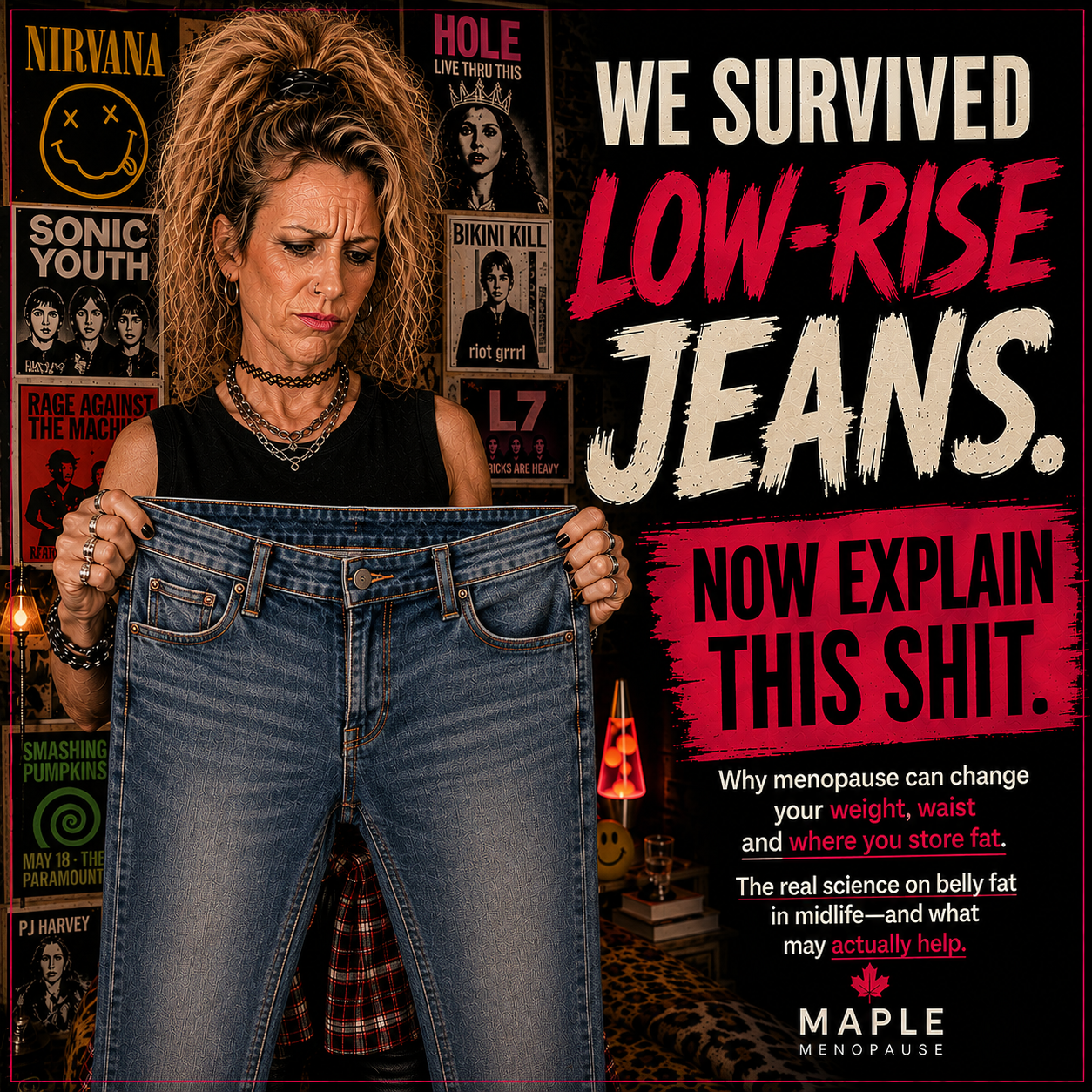
Midlife can bring two overlapping changes: gradual weight gain associated largely with ageing and daily life, and a menopause-related shift in where fat is stored. They are connected, but they are not the same thing. That distinction explains why your waist may change more dramatically than your weight.
We survived low-rise jeans. We deserve a better explanation than “eat less.”
IN THIS ARTICLE
- Weight gain and fat redistribution are not identical
- Why the belly?
- Does metabolism really crash at menopause?
- What about the famous “cortisol belly”?
- What may actually help
- Can MHT help with weight?
- Things I would side-eye
- Ozempic, Wegovy and the GLP-1 conversation
- The scale is not the whole story
- When a changing abdomen or weight deserves assessment
- A better question than “How do I get my old body back?”
- Sources and further reading
Weight gain and fat redistribution are not identical
Women often say menopause made them gain weight. The more interesting answer is that two things may be happening at once: some midlife weight gain, and a change in where the body prefers to store fat.
Average body weight often rises through adulthood, including before menopause. Ageing, less everyday movement, injuries, caregiving, work stress, sleep loss, medication effects and a gradual loss of lean tissue can all contribute. Menopause is not a switch that suddenly makes weight appear.
Still, the menopause transition leaves its own fingerprints. Longitudinal research—including the multi-ethnic Study of Women’s Health Across the Nation (SWAN)—found that at the start of the menopause transition, the rate of fat gain approximately doubled and lean mass began to decline; those changes continued until roughly two years after the final menstrual period. Crucially, overall body weight did not show the same menopause-specific acceleration: weight had already been rising with age, and its rate did not suddenly speed up when the transition began.
Separate SWAN analyses found a marked acceleration in central/android fat and increases in visceral fat across the transition. In other words, the scale can tell a relatively boring story while body composition and waist shape tell a different one.
So the scale may be up only a few pounds while your clothes fit as though an entirely different committee approved them. Your jeans still fit through the legs, but the waistband has become an adversary. That can be a real body-composition change, not a failure to read a nutrition label.
For the deeper physiology and cardiometabolic context, see The Midlife Metabolic Shift. This article stays focused on the question you are probably asking while buttoning your trousers.
Why the belly?
Abdominal fat isn’t one uniform tissue. The softer fat under the skin is subcutaneous fat. Visceral fat sits deeper, around the abdominal organs, and higher amounts are more strongly associated with insulin resistance and cardiovascular risk. You can’t diagnose visceral fat by looking in the mirror or pinching your stomach.
Before menopause, women tend to store proportionally more fat around the hips and thighs. Researchers call this a gynoid pattern. As ovarian estrogen falls, distribution tends to shift toward the abdomen—the android pattern. Menopause-transition studies have documented increases in both abdominal subcutaneous fat and visceral fat, sometimes even when weight changes little.
At the same time, lean mass may decline unless muscle gets a reason to stay. Less lean tissue can subtly affect daily energy needs and function. Poor sleep, disruptive hot flashes, fatigue, pain and stress can also change appetite, recovery and how much you move without noticing.
What that means in plain English
You may notice a thicker waist, less fullness around the hips or thighs, or trousers that fit everywhere except the place they’re meant to close. Some abdominal change may be subcutaneous fat; some may be visceral fat; some may be bloating, posture, skin or a medical issue. Appearance alone can’t tell you which is which.
Does metabolism really crash at menopause?
So, did your metabolism fall off a cliff at 50?
Probably not. Resting energy expenditure generally changes gradually with age, body size and lean mass. There may be menopause-specific effects, but the evidence doesn’t support a sudden metabolic shutdown on the day your ovaries change shifts.
What can change is the entire setting in which energy balance happens. You may have less muscle, sleep badly, move less without realizing it, recover more slowly, feel hungrier or be taking a medication that affects weight. Exercising exactly as you did ten years ago may not produce exactly the same result because you—and the rest of your life—aren’t frozen in time.
Calories still matter. But “eat less and move more” is an equation pretending to be an explanation. Estimating intake and expenditure is imprecise, and biology affects hunger, recovery, movement and how sustainable any plan feels. Severe restriction can also make it harder to preserve muscle, meet nutrient needs and maintain a sane relationship with food.
Exercise matters, but so do walking, standing, fidgeting and the thousand small movements that disappear when you’re exhausted or in pain. Food intake can drift upward through portions, drinks, restaurant meals or stress eating without anyone being dishonest or careless.
If fatigue is making movement feel impossible, do not automatically blame menopause. Start with Why Am I So Tired? Sleep disruption also deserves its own plan; see Why Am I Awake at 3 A.M.?
What about the famous “cortisol belly”?
Cortisol is a real hormone. Chronic stress and sleep deprivation can affect appetite, glucose regulation, eating behaviour and recovery. But “cortisol belly” has become an internet diagnosis applied to almost any midlife abdomen—often just before someone sells you a supplement, detox or special exercise plan.
There is no routine clinical diagnosis of menopause “cortisol belly,” and appearance cannot identify cortisol excess. If you have unusual easy bruising, wide purple stretch marks, marked muscle weakness or other concerning changes, bring them to a clinician rather than an Instagram protocol. For most women, menopause-related body composition, ageing, sleep, activity and energy balance are already a sufficiently complex explanation without inventing a single villain.
What may actually help
Resistance training: give muscle a reason to stay
Resistance training supports strength, function, bone health and lean tissue. It does not selectively remove abdominal fat, and the research does not support promising a particular waist measurement. Its value is broader: stronger muscles make daily life easier, help preserve functional capacity and improve the quality of weight loss when weight loss is a goal.
Two or more sessions a week that train the major muscle groups is a practical target for many people, adjusted for experience, pain and medical limitations. Machines, free weights, resistance bands and body-weight exercises can all count. Progress gradually rather than attempting to recreate a 1994 boot-camp video on day one. For the bone-health connection, read Bone Health After 40.
Aerobic exercise—and what “Zone 2” actually means
Moderate aerobic work improves cardiorespiratory fitness and contributes to energy expenditure and cardiometabolic health. “Zone 2” usually means a steady effort where breathing is clearly faster but you can still speak in short sentences. Brisk walking, cycling, incline treadmill work, swimming and the elliptical can all fit.
You do not need perfect wearable data, a lactate test or a podcast-approved heart-rate formula. Zone 2 is not a magical fat-melting setting. It is simply a manageable intensity that many people can sustain long enough to build fitness. Higher-intensity work may also be useful if it suits your health, joints, preferences and recovery.
General movement counts
Walking, errands on foot, stairs, gardening, standing breaks and reducing long sedentary stretches can add up. A step count is a tool, not a moral score. Start from your current baseline and build something repeatable.
Nutrition: sustainable beats theatrical
If fat loss is the goal, a sustainable energy deficit is usually required. That does not mean one universal calorie target or a punishing diet. Protein helps support lean tissue and satiety; fibre-rich foods support fullness, bowel health and cardiometabolic health; minimally processed foods often make it easier to assemble satisfying meals. Regular meal structure may help some people avoid arriving at 9 p.m. ravenous.
For the evidence and practical options, see Protein After 40 and Protein Without the Fuss. If you want practical supports rather than diet-culture theatre, visit Healthy-Weight Support in Midlife.
Sleep and alcohol belong in the conversation
Sleep disruption can make movement, appetite regulation and food choices harder. Treating night sweats or insomnia is not a weight-loss hack; it can make the behaviours you were trying to perform while exhausted more achievable. Alcohol also contributes energy, can worsen sleep and may make appetite and food decisions harder for some people. If it has started affecting you differently, see Why Does Alcohol Hit Different in Perimenopause and Menopause?
When a registered dietitian is worth it
If every expert online has handed you a different calorie target, protein rule or list of forbidden foods, a Canadian registered dietitian (RD) can help sort the signal from the noise. An RD is a regulated health professional. “Nutritionist” isn’t an interchangeable protected title everywhere in Canada, although provincial rules vary.
One or several appointments may be more useful than spending the same money cycling through supplements, menopause diet plans and algorithmic advice. An RD can be particularly helpful if you want an individualized energy, protein or fibre strategy; have diabetes, prediabetes, cardiovascular risk or gastrointestinal symptoms; eat vegetarian or vegan; have a history of chronic dieting or disordered eating; or use an anti-obesity medication and want to protect nutrition and lean tissue.
Can MHT help with weight?
If estrogen is involved in where fat gets stored, does replacing estrogen stop the belly change?
Not in the tidy way anyone selling that idea would like. Menopausal hormone therapy is not a weight-loss treatment, and weight loss alone isn’t a reason to start it. Studies suggest MHT may have modest favourable effects on abdominal or visceral fat accumulation and some body-composition measures. The results vary, and evidence that it meaningfully preserves lean mass is inconsistent. Don’t expect it to produce substantial weight loss.
There may also be an indirect route. If appropriate MHT substantially reduces hot flashes and night sweats, improves sleep or reduces symptom-related fatigue, exercising and eating regularly may become easier. That is useful, but it is not guaranteed weight loss.
MHT decisions should be based on symptoms, health history, risks, benefits and personal preferences—not the promise of a smaller waist. See Hormones and MHT in Canada for the full Canadian treatment context.
Things I would side-eye
- “Hormone-balancing” supplements: usually a marketing phrase in search of a measurable outcome.
- Menopause fat burners, metabolism boosters and cortisol reducers: impressive names often propped up by weak evidence, stimulant effects or proprietary blends that hide the useful detail—the dose.
- Detox teas and cleanses: tea can be lovely. It can be hydrating. It can make 3 p.m. less grim. It isn’t a meaningful treatment for abdominal fat.
- Menopause miracle diets: extreme keto plans, juice cleanses and unsupervised very-low-calorie diets don’t acquire special powers because “menopause” was added to the sales page.
- Spot reduction: abdominal exercises strengthen abdominal muscles. They don’t send a memo instructing the body to burn the fat sitting above them.
None of this is a judgment on the woman who bought the powder, tea or 21-day plan. The marketing works because the problem is real and the promised answer is wonderfully simple. The evidence is the inconvenient part.
No single macronutrient uniquely causes menopause belly fat. Before spending money on a “menopause metabolism” bottle, read Proven Supplements? What the Menopause Evidence Actually Supports.
Ozempic, Wegovy and the GLP-1 conversation
Ozempic has become shorthand for an entire cultural argument about weight. That is already confusing, because Ozempic, Wegovy, semaglutide and the wider incretin-drug category aren’t interchangeable terms.
Semaglutide is the drug ingredient. Ozempic is a semaglutide product authorized primarily for type 2 diabetes; Wegovy is semaglutide authorized for chronic weight management in eligible patients. Other incretin-based medications include liraglutide and tirzepatide. The brand, dose, indication and evidence matter.
These medications aren’t cheating. They are legitimate medical treatments for appropriate patients. They also aren’t casual cosmetic accessories.
Canada’s updated 2025 obesity pharmacotherapy guidance supports medication as part of individualized, long-term care for eligible adults, alongside health-behaviour changes. Assessment considers central adiposity and adiposity-related health complications—not BMI alone. Health Canada-approved long-term options include semaglutide 2.4 mg (Wegovy) and tirzepatide (Zepbound), among others. These are obesity treatments, not menopause drugs, and a prescription should follow an individualized assessment—not a social-media before-and-after photo.
Before starting, the conversation should include realistic benefits; common gastrointestinal effects such as nausea, vomiting, diarrhea and constipation; gallbladder concerns and medication-specific precautions; interactions with your health conditions and other drugs; and the unglamorous but important questions of cost, coverage and access. If long-term treatment isn’t feasible, that matters before the first dose.
Weight loss—from medication, surgery or diet—usually includes some lean tissue as well as fat. “Lean mass” on a scan is not identical to skeletal muscle, and the clinical meaning varies, but midlife women have good reason to protect strength. Adequate protein, resistance training and individualized monitoring matter, particularly during rapid or substantial weight loss. Bone health and physical function belong in the conversation too.
Stopping treatment commonly leads to weight regain. In the STEP 1 extension, participants regained about two-thirds of their prior semaglutide-associated weight loss during the year after withdrawal. That supports viewing obesity as a chronic condition for many people and discussing long-term treatment before starting—not blaming patients when biology reasserts itself.
Evidence specifically focused on menopausal women remains thinner than the overall obesity-treatment evidence. Preliminary observational findings about combining MHT with GLP-1 treatment are hypothesis-generating, not a reason to create a standard menopause drug cocktail.
In Canada, use a licensed prescriber and licensed pharmacy. Current Canadian guidance recommends against compounded or unapproved weight-loss medications. Do not use someone else’s medication or buy semaglutide, tirzepatide or “research” versions from dubious online sellers. Health Canada has specifically warned about counterfeit and unauthorized GLP-1 products.
The scale is not the whole story
If weighing yourself is useful and emotionally neutral, it can be one data point. It is not a complete report card. Depending on your goals and health history, other meaningful measures can include:
- Waist circumference, used occasionally rather than compulsively
- Strength and the tasks your body can perform
- Aerobic fitness and recovery
- Blood pressure
- Glucose or A1C when clinically relevant
- Lipid levels
- Energy, sleep and daily function
- How clothing fits and feels
A smaller number is not automatically better health, and returning to your 25-year-old body is not a medical requirement. The useful target is a body you can support—not a previous-life number you must chase forever.
When a changing abdomen or weight deserves assessment
Not every change is menopause. Arrange medical assessment for rapid unexplained weight gain, marked or persistent abdominal distension, swelling in the legs or elsewhere, new severe fatigue, symptoms suggesting thyroid dysfunction or diabetes, a change that began after a medication adjustment, or concerning gastrointestinal or pelvic symptoms such as persistent pain, early fullness, vomiting, a new mass or abnormal bleeding.
You do not need to arrive with a diagnosis. Bring the timeline, associated symptoms, medication changes and what you have noticed. The Prepare for My Menopause Appointment guide can help organize that conversation.
A better question than “How do I get my old body back?”
Body grief is real. You can become stronger and fitter and still feel unsettled by a shape you do not recognize. You are allowed to dislike a body change without declaring war on your body.
A more useful goal may be to reduce health risk, preserve muscle, feel physically capable and make deliberate choices about fat loss—without spending the next decade being punished by food and mirrors.
So what do you actually do with all of this?
Start with the body you have now, not the one you wore to a club in 1992. Build strength. Keep moving. Work on cardiovascular fitness. Eat enough protein and fibre to support the plan. Treat sleep-disrupting symptoms when appropriate. Ask for qualified help when the problem is more complicated than an app can solve.
Yes, bodies change in midlife. Menopause can affect where fat is stored. Neither fact makes weight management impossible, proves that you’ve failed or obliges you to buy everything marketed to your hormones.
Your body changed. You deserved a real explanation.
Sources and further reading
- SWAN: Changes in body composition and weight during the menopause transition
- SWAN: Changes in regional fat distribution across the menopause transition
- SWAN Heart: Abdominal visceral adipose tissue over the menopause transition
- Menopause and Body Composition: A Complex Field (2025 review)
- Changes in regional fat distribution across the menopause transition
- Body composition and cardiometabolic health across the menopause transition
- Exercise training and body composition in postmenopausal women: systematic review and meta-analysis
- Hormone therapy and muscle mass: systematic review and meta-analysis
- Obesity Canada: Canadian Adult Obesity Clinical Practice Guideline
- STEP 1 extension: weight regain after semaglutide withdrawal
- Health Canada: warning about counterfeit and unauthorized GLP-1 products
- Dietitians of Canada: dietitian and nutritionist titles
This article provides general educational information and is not a diagnosis or individualized medical, nutrition or exercise prescription.